 Coil
Is Metal Detecting Legal? US Rules by Type of Land
Researched guide: written from manufacturer documentation and the sources listed at the end. Facts last checked November 25, 2026.
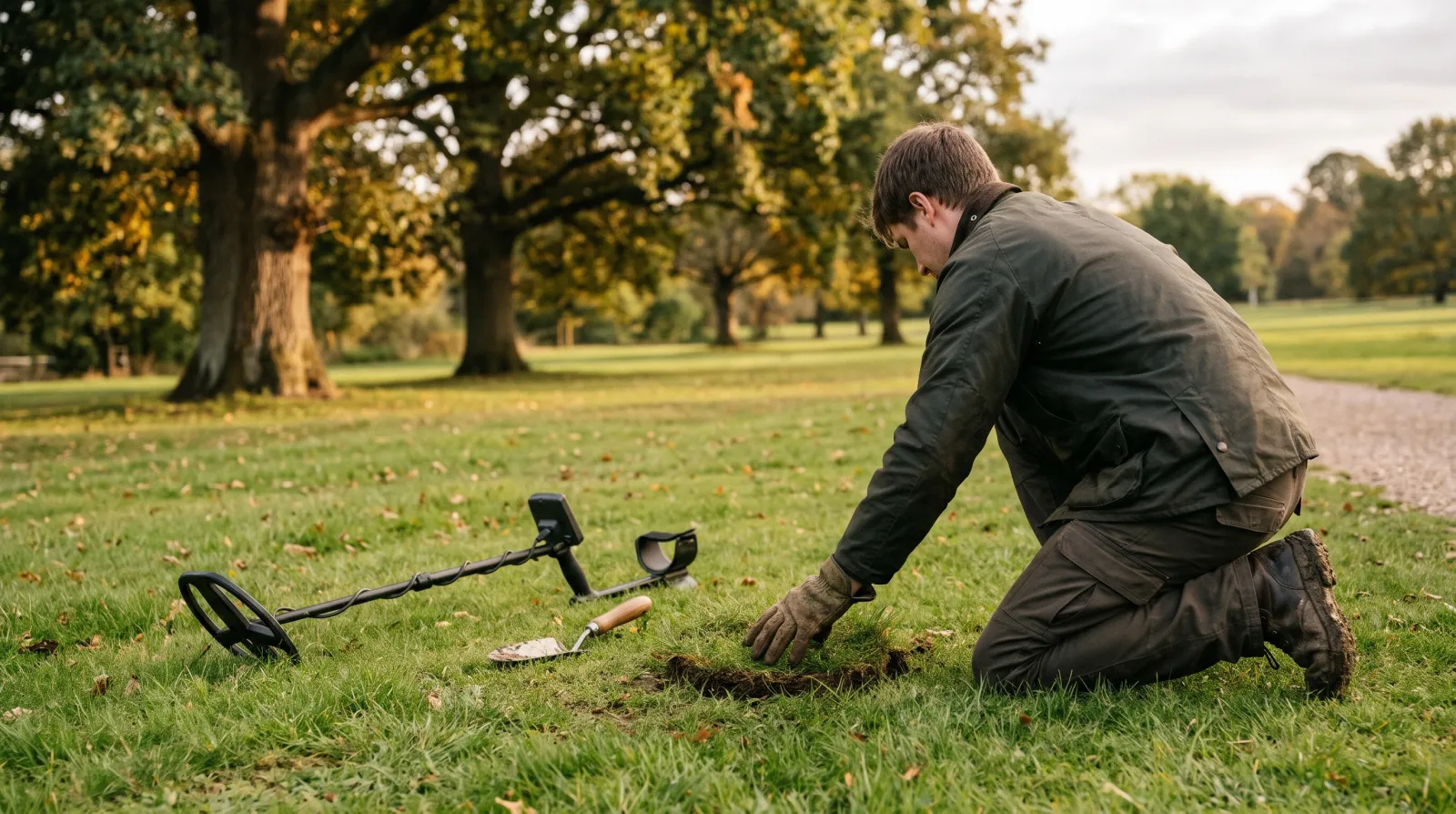
Metal detecting is legal in much of the United States, but there is no single national rule. What you may do depends on who owns or manages the land, and the rules range from “go ahead” to “do not bring a detector at all”.
This page summarizes the rules by type of land, with the federal regulations cited. It is a starting point, not legal advice. Rules change and many places add their own local conditions, so confirm with the land manager before you dig.
Quick answer by type of land
| Land | Metal detecting | Main rule |
|---|---|---|
| National parks, seashores, monuments (NPS) | Prohibited | 36 CFR 2.1(a)(7) |
| National Wildlife Refuges | Searching for antiquities prohibited without a permit | 50 CFR 27.62 |
| BLM land | Generally allowed for recreation; no artifacts | ARPA; BLM rules; local closures |
| National Forests | Generally allowed for recreation; not at heritage sites | ARPA; Forest Service rules; local closures |
| Army Corps of Engineers lakes | Allowed on designated beaches and disturbed areas unless the district prohibits it | 36 CFR 327.14(d) |
| State parks | Varies by state | State park rules; often designated areas or permits |
| City and county parks, public beaches | Varies by city or county | Local ordinances |
| Private land | Allowed with the owner’s permission | State trespass laws |
National parks: no detecting
Federal regulation 36 CFR 2.1(a)(7) prohibits possessing or using metal detecting devices in National Park Service areas. The only exception is a device that is broken down and stored or packed so it cannot be used while in the park.
This covers every NPS unit, not only the big-name parks. National seashores, national lakeshores, national monuments, national battlefields and national historic sites are all NPS areas. If you are driving through with a detector in the car, keep it disassembled and stowed.
Archaeological resources on federal land
The Archaeological Resources Protection Act of 1979 (ARPA) prohibits excavating or removing archaeological resources from federal or tribal land without a permit, and trafficking in resources that were removed illegally. Under the law’s regulations, an item generally has to be at least 100 years old to count as an archaeological resource.
In practice, this means that on any federal land:
- Do not detect on or near archaeological or historic sites.
- If you find something that looks old or historic, leave it where it is and report it to the land manager.
- Permits to search for historic or archaeological items are issued for scientific research, not for hobby detecting.
The National Park Service notes that looting archaeological resources on federal land can be prosecuted as a felony. Equipment and vehicles used in a violation can be forfeited.
BLM land
The Bureau of Land Management generally allows recreational metal detecting, as long as no artifacts are removed. BLM’s collecting guide says you may prospect for minerals such as gold, silver and gemstones with hand tools including metal detectors, subject to mining claims and local rules. It also lists historic coins among the items you may not collect; only modern money may be kept.
Some BLM areas are closed to detecting or collecting, and mining claims belong to their claim holders. Check with the local BLM field office before you go.
National Forests
The U.S. Forest Service treats recreational metal detecting for small, non-valuable items as generally allowed in many areas. It is your responsibility to avoid areas that may contain cultural or historic resources, and forest supervisors can close areas to detecting. Searching for historic or archaeological items requires a special use permit under ARPA and the Antiquities Act. Check with the local ranger district for closures.
Army Corps of Engineers lakes
Under 36 CFR 327.14(d), metal detectors are permitted on designated beaches and other previously disturbed areas at Corps of Engineers projects, unless the District Commander prohibits it to protect archaeological, historical or paleontological resources. Information about designated areas is available at the project’s manager’s office.
Districts add their own conditions. Some limit detecting to mowed, developed park areas and require written permission elsewhere. Items you find are subject to the Corps’ rules on found property, so ask the lake office how they handle finds.
National Wildlife Refuges
Under 50 CFR 27.62, searching for or removing objects of antiquity on National Wildlife Refuges is prohibited unless authorized under the federal antiquities regulations. Refuges also prohibit removing natural objects and public property in general. Treat refuges as no-detecting areas unless the refuge office tells you otherwise in writing.
State parks and state land
Every state sets its own rules. Some states allow detecting in designated areas of state parks, often beaches or swimming areas; some require a free or paid permit; some prohibit it. State historic sites are usually off-limits. Check the state parks department’s rules or ask the park office before you go. Our state-by-state guides will cover each state’s rules with links to the official sources.
City parks and public beaches
Cities and counties make their own rules. Some allow detecting freely, some require a permit, some ban digging in turf or limit detecting to certain hours or seasons, and some ban it outright. Public beaches are usually managed by a city, county or state agency, and dunes and protected habitat areas are often closed. The parks department or beach authority can tell you the current rules.
Private land
Private land needs the owner’s permission. Detecting without it is trespassing, and depending on the state it can bring fines or criminal charges.
- Ask first, and get the permission in writing if you can.
- Agree in advance who keeps what. Many detectorists offer to return anything the owner lost and to split valuable finds.
- Follow the owner’s conditions about where you may dig, and fill every hole.
Who owns valuable lost property can also depend on state law. If you find something of real value, such as a hoard of coins, check your state’s lost-property rules before deciding what to do with it.
A simple rule for staying legal
- Find out who owns or manages the land.
- Look up that owner’s rules, or ask the office directly.
- Get permission or a permit if one is needed.
- Leave anything historic or archaeological where it is and report it.
If you cannot find out who manages a piece of land, do not detect there.
Frequently asked questions
Is metal detecting illegal in the United States?
No. Metal detecting is legal in many places, but not everywhere. It is banned in national parks, restricted on wildlife refuges and around archaeological sites, and allowed with conditions on much other public land. Cities, counties and states set their own rules for parks and beaches, and private land needs the owner's permission.
Can you metal detect in national parks?
No. Federal regulation 36 CFR 2.1(a)(7) prohibits possessing or using a metal detector in National Park Service areas, which include national seashores and national historic sites. The only exception is a detector that is broken down and stored so it cannot be used.
Do you need a permit to metal detect?
It depends on the land. Some cities and state parks require a permit or limit detecting to designated areas. Searching for archaeological or historic items on federal land requires a permit that is granted for scientific research. Private land needs the owner's permission rather than a permit.
Can I keep what I find with a metal detector?
On your own land, generally yes. On private land, agree on ownership with the landowner first. On public land, the rules vary: historic and archaeological items on federal land must be left in place, and some agencies require found items to be turned in. Valuable lost property can also fall under state lost-property laws.
Sources
- 36 CFR 2.1, Preservation of natural, cultural and archeological resources (National Park Service)
- 36 CFR Part 327, Rules governing public use of Corps of Engineers water resources development projects
- 50 CFR 27.62, Search for and removal of objects of antiquity (National Wildlife Refuges)
- 16 U.S.C. 470bb, Archaeological Resources Protection Act definitions
- 16 U.S.C. 470ee, Archaeological Resources Protection Act prohibited acts
- U.S. Forest Service: Metal detecting
- Bureau of Land Management: Can I Keep This?
- National Park Service: Prevent looting and vandalism