 Coil
Metal Detecting Supplies: The Complete Gear Checklist
Researched guide: written from manufacturer documentation and the sources listed at the end, not from hands-on testing of every product. Some links are affiliate links; see the disclosure.
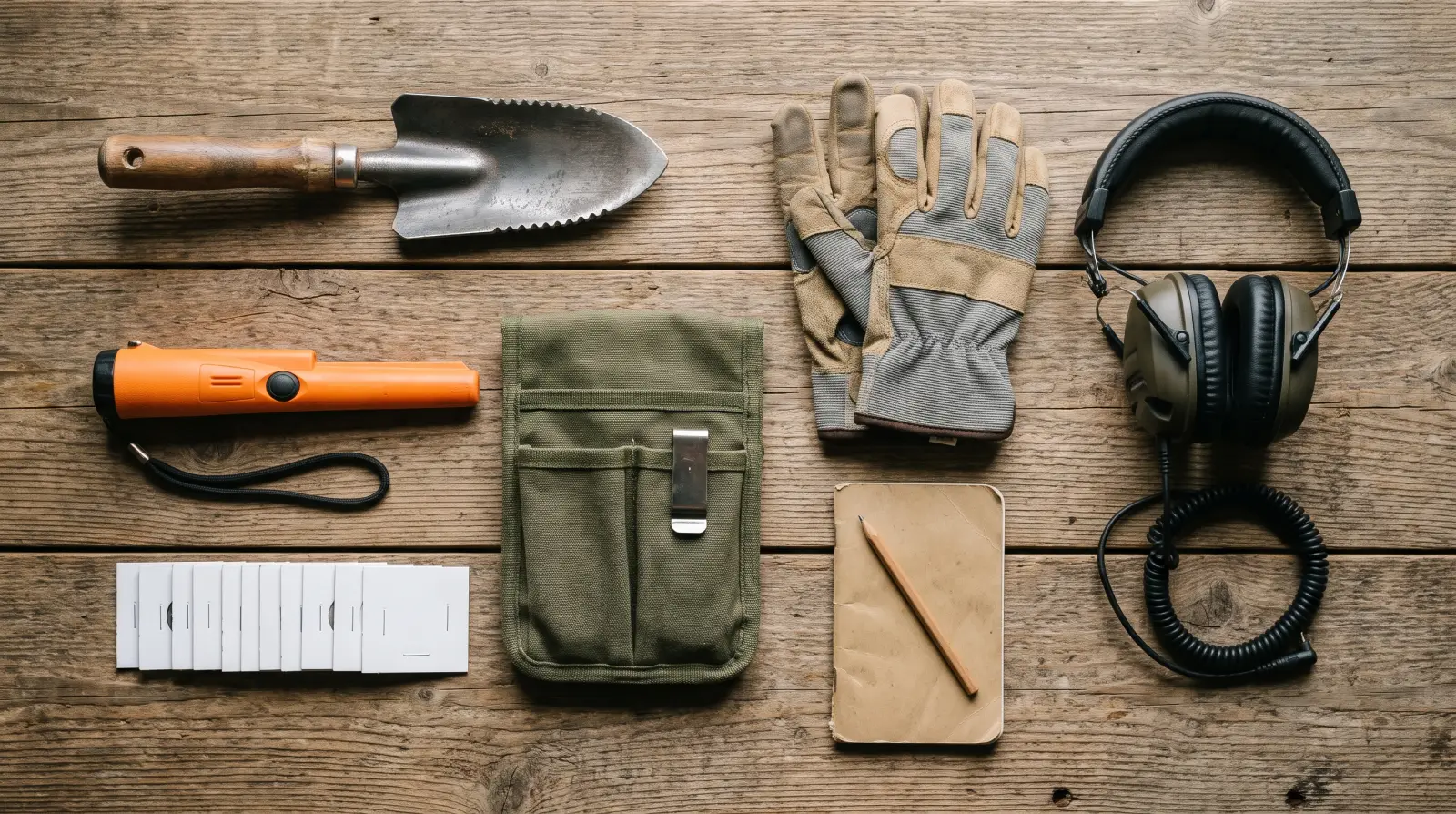
The detector gets the attention, but the gear around it decides how much ground you cover, how clean your holes are, and whether you still enjoy the hobby after the third hour. This checklist sorts metal detecting supplies into three groups: what you need on day one, what most people add within a few outings, and extras for the beach and long days out.
New to the hobby? Start with our metal detecting for beginners guide, and see the best metal detector for beginners if you have not chosen a detector yet.
Day-one essentials
A real digging tool
A sturdy, serrated hand digger is the most important tool after the detector. It needs to cut through turf and roots, and it needs a thick enough blade that it will not bend in hard or stony ground. Many detectorists use a T-handle digger such as the Lesche for fields, or a compact hand digger such as the Garrett Edge Digger for parks and lawns.
Look for:
- a serrated edge for cutting roots
- depth marks on the blade, so you know how deep the target was
- a sheath or holster, so you are not carrying a sharp blade loose
A finds pouch with two pockets
One pocket for finds, one for trash. You will dig far more pull tabs, foil and nails than coins, and taking that trash with you is part of the detecting code. A finds pouch on a belt keeps both hands free.
Gloves
Soil hides broken glass, rusty metal and sharp can edges. Cut-resistant gloves protect your hands without making it hard to pick up a small coin.
A towel or mat for soil
Put the soil you dig onto a small towel or a mat instead of the grass. When you refill the hole, nothing is left behind and the lawn looks untouched.
The first upgrades
Pinpointer
A pinpointer is a small handheld probe that beeps or vibrates as it gets close to metal. Once your hole is open, it shows you exactly where the target is: in the hole wall, at the bottom, or in the plug you just lifted. It is the upgrade almost every detectorist makes first.
Widely used models include the Garrett Pro-Pointer AT, the Minelab Pro-Find 40 and the Nokta AccuPoint. If you will hunt in the water, check the waterproof rating of the exact model; not every pinpointer is fully submersible.
A tip that saves real money: pinpointers are easy to lose in long grass. Choose a bright color, use a lanyard, and if the model has a lost-pinpointer alarm, learn how it works.
Headphones
Faint signals at depth are much easier to hear through headphones, and you will not annoy people around you in a park or on the beach. Some detectors pair with wireless headphones; others need a wired set with the right plug. Check your detector’s manual before buying.
Coil cover
A coil cover is a cheap plastic skid plate that protects the search coil from scratches and wear. Coils are expensive to replace, and the cover takes the abuse instead. Make sure it matches your coil’s exact size and shape.
Beach extras
- Sand scoop. A long-handled sand scoop digs and sifts in one move, in dry sand or under water. See our best metal detector for the beach guide for the rest of a beach setup.
- A waterproof pinpointer, if you will wade.
- Fresh water. Rinse the detector, coil and scoop after any saltwater session.
Comfort for long hunts
- Kneeling pad. You will kneel hundreds of times in a day. A foam kneeling pad saves your knees.
- Arm support or harness. Some detectors take an arm strap or bungee harness that moves weight off your wrist on long sessions.
- Spare power. Carry spare batteries, or a power bank if your detector charges by USB and the manual allows charging in use.
- Water, sunscreen and a hat. Detecting days run long.
Looking after your finds
- Coin holders. Cardboard 2x2 coin holders keep coins from rubbing together and let you write where and when each one was found.
- Small containers. Pill boxes or small jars protect fragile items and jewelry on the way home.
- A finds log. Note the date, place and depth of good finds. It helps you spot productive areas, and it adds history to the find.
Do not clean old coins aggressively. Scrubbing or chemical cleaning can destroy the surface and much of a coin’s value. Research the type of find before you clean it.
The full checklist
| Item | When | Why |
|---|---|---|
| Metal detector | Day one | Finds the target |
| Digging tool | Day one | Clean plugs, hard ground |
| Finds pouch (2 pockets) | Day one | Finds and trash separate |
| Gloves | Day one | Glass and sharp metal |
| Towel or mat | Day one | No soil left on the grass |
| Pinpointer | First upgrade | Smaller holes, faster recovery |
| Headphones | First upgrade | Faint signals, quiet hunting |
| Coil cover | First upgrade | Protects the coil |
| Sand scoop | Beach | Dig and sift in sand and water |
| Kneeling pad | Comfort | Saves your knees |
| Spare power | Comfort | Longer hunts |
| Coin holders and a finds log | Finds | Protect and record finds |
Most of this costs far less than the detector, and the day-one items plus a pinpointer make more difference to your first season than any detector upgrade.
Frequently asked questions
What supplies do I need to start metal detecting?
A metal detector, a digging tool, a finds pouch with a separate trash pocket and a pair of gloves. A pinpointer and headphones are the first two upgrades most detectorists add.
Do I need a pinpointer for metal detecting?
It is not strictly necessary, but it saves a lot of time. A pinpointer finds the exact position of a target inside the hole or plug, so you dig smaller holes and stop sifting through loose soil by hand.
What is the best digging tool for metal detecting?
In grass and soil, a serrated hand digger with a sharp, sturdy blade cuts neat plugs and lasts. On the beach, a long-handled sand scoop is much faster. Avoid flimsy garden trowels, which bend in hard ground.
Should I buy a metal detector kit or separate pieces?
Bundles from detector brands, which add a pinpointer, headphones or a digger to the detector, can be good value. Very cheap all-in-one kits often include low-quality tools you will replace. Check what each item in a bundle is before deciding.