 Coil
Can You Make Sea Glass in a Rock Tumbler? How to Tumble Glass
Researched guide: written from manufacturer documentation and the sources listed at the end, not from hands-on testing of every product. Some links are affiliate links; see the disclosure.
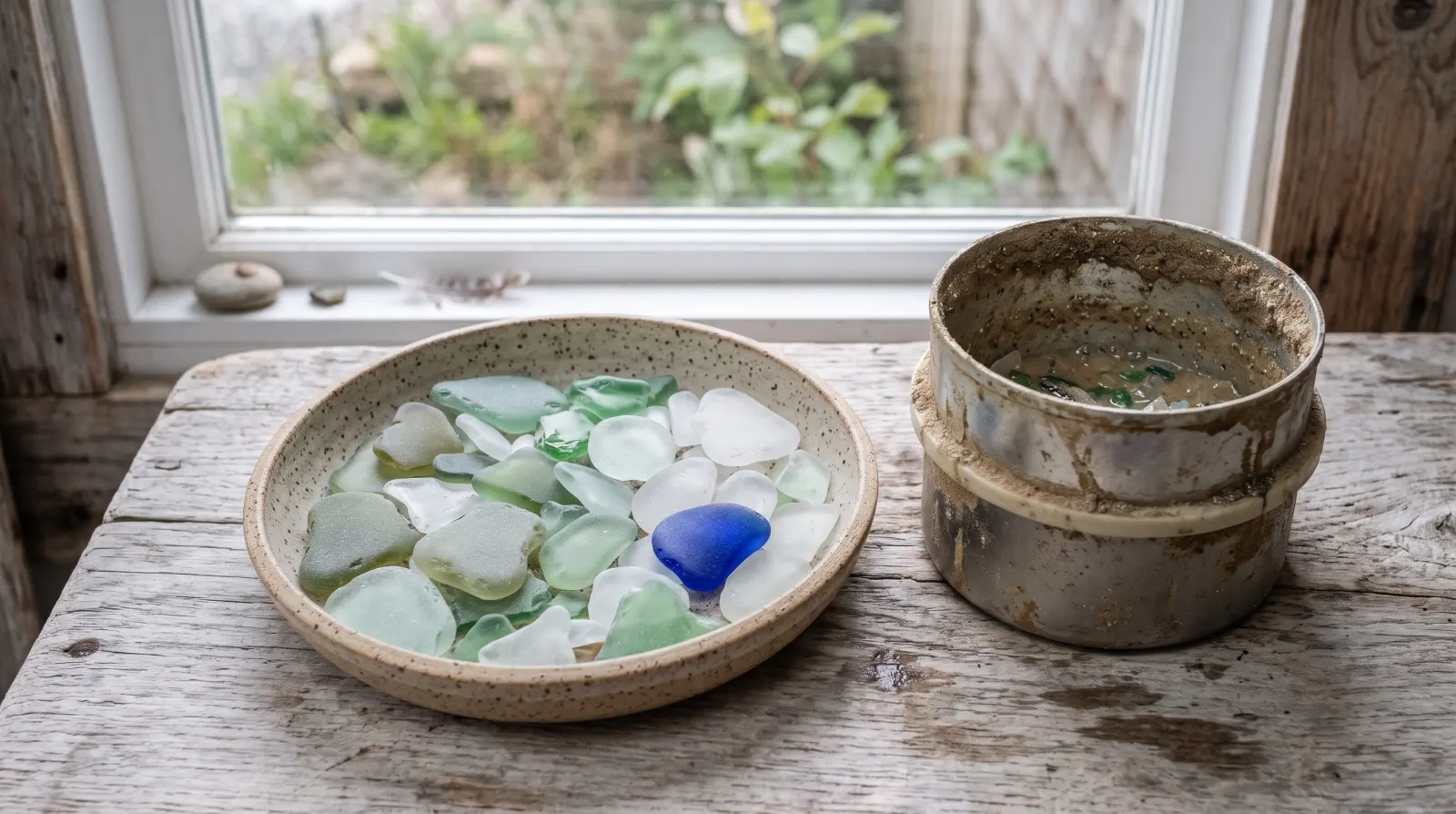
Yes, you can. A rock tumbler can turn glass into rounded, frosted pieces that look a lot like sea glass. It takes days rather than weeks, because glass is much softer than the rocks tumblers are usually loaded with.
What you get is tumbled glass, not genuine sea glass. Real sea glass is shaped by waves and sand over many years, and collectors value it for that. Tumbled glass is great for crafts, jewelry practice and filling a jar, but call it what it is if you sell or gift it.
Check your tumbler first
Glass needs a slow tumbler. Rocktumbler.com puts the safe range at under about 50 to 60 barrel revolutions per minute and warns that at around 90 or more, glass will likely bruise or fracture. Many toy and beginner tumblers turn faster than that.
Hobby-grade rotary tumblers such as the Lortone 3A and Thumler’s A-R1 are slow enough. See our rock tumbler guide if you are choosing one.
Choose the right glass
- Landscape glass from garden centers works well if it is not heavily cracked.
- Recycled glass cullet in thick chunks, at least 1/4 inch thick
- Offcuts from glass and stained glass shops
Avoid bottle glass. It has thin, curved walls that tumble into fragile, sharp pieces. Rocktumbler.com recommends pieces about 1/2 inch to 1 1/2 inches across, and avoiding curved pieces.
Buying glass that is already broken is safer than breaking it yourself. If you do break your own, wrap it in a heavy towel first, as Fire Mountain Gems suggests, and wear eye protection.
Safety
Glass needs more care than rock:
- Gloves, safety glasses and a dust mask. Glass is sharp, and glass dust should not be breathed in.
- Watch for gas. Some glass makes gas in the barrel. Check a couple of times a day at first. A bulging rubber barrel means pressure is building, and in extreme cases the lid can pop off. Open the barrel slowly, with safety glasses on.
- Never pour the slurry down a drain. Let it settle in a bucket and put the solids in the trash.
How to make frosted “sea glass”
- Load the barrel half to two-thirds full with glass. Add ceramic pellets to fill the gaps, about three or four heaping tablespoons per pound of glass. If you are short of glass, add large pellets to reach two-thirds full. Use pellets that have been tumbled before; new ones can scratch.
- Skip the coarse grit. Glass is soft enough that the coarse stage is usually unnecessary.
- Add medium grit (150/220 or similar), about two level tablespoons per pound, and water until it almost covers the glass.
- Run for four or five days, then check. Glass wears quickly, so check earlier than you would with rock.
- For more luster, clean everything and run fine grit for two or three days.
Beach sand can stand in for medium grit. It is softer than silicon carbide grit, so expect it to take more days.
How to polish glass instead
If you want clear, glossy glass rather than a frosted finish:
- Run fine grit for about three days.
- Clean thoroughly, then run aluminum oxide polish for four to seven days.
- Burnish for about 30 minutes in water with roughly one level tablespoon of grated plain soap per pound of glass.
Glass schedule at a glance
| Finish | Stage | Time |
|---|---|---|
| Frosted (sea glass look) | Medium grit | 4 to 5 days, then check |
| Frosted with more luster | + fine grit | 2 to 3 days |
| Polished | Fine grit, then polish, then burnish | About 3 days, 4 to 7 days, 30 minutes |
Treat your first batch as a test, as Fire Mountain Gems advises. Every glass behaves a little differently, so note what you ran and for how long. Our printable grit schedule and tumbling log has a glass column for that.
Tumbled glass vs real sea glass
If you already collect real sea glass, there is usually no reason to tumble it. Its frosting comes from years of natural wear, and tumbling only removes more of the original piece. Tumbling makes sense for glass you have sourced yourself, or for practice pieces before you drill or set real sea glass.
Free printable grit schedule
Grit sizes, times and a tumbling log you can print, plus one short email a week with new guides.
No spam. Unsubscribe anytime. Privacy
Frequently asked questions
Can you make sea glass in a rock tumbler?
Yes. Tumbling glass in medium grit gives it the frosted, rounded look of sea glass in a few days. It is tumbled glass rather than genuine sea glass, which is shaped by waves over many years, so label it that way if you sell or gift it.
How long does it take to make sea glass in a tumbler?
For a frosted finish, about four or five days in medium grit is a common starting point, with an extra two or three days in fine grit for more luster. Check the batch every day or two, since glass wears faster than rock.
Can I tumble glass with rocks?
It is better not to. Glass is softer than agate and jasper and wears down much faster, so mixed batches leave the glass undersized and the rocks unfinished.
Do I need the coarse grit for glass?
Usually not. Glass is softer than the stones coarse grit is meant for, so most glass schedules start at the medium stage.