 Coil
Metal Detecting in Alaska: Laws, Gold Panning and Where You Can Go
Researched guide: written from manufacturer documentation and the sources listed at the end. Facts last checked November 25, 2026.
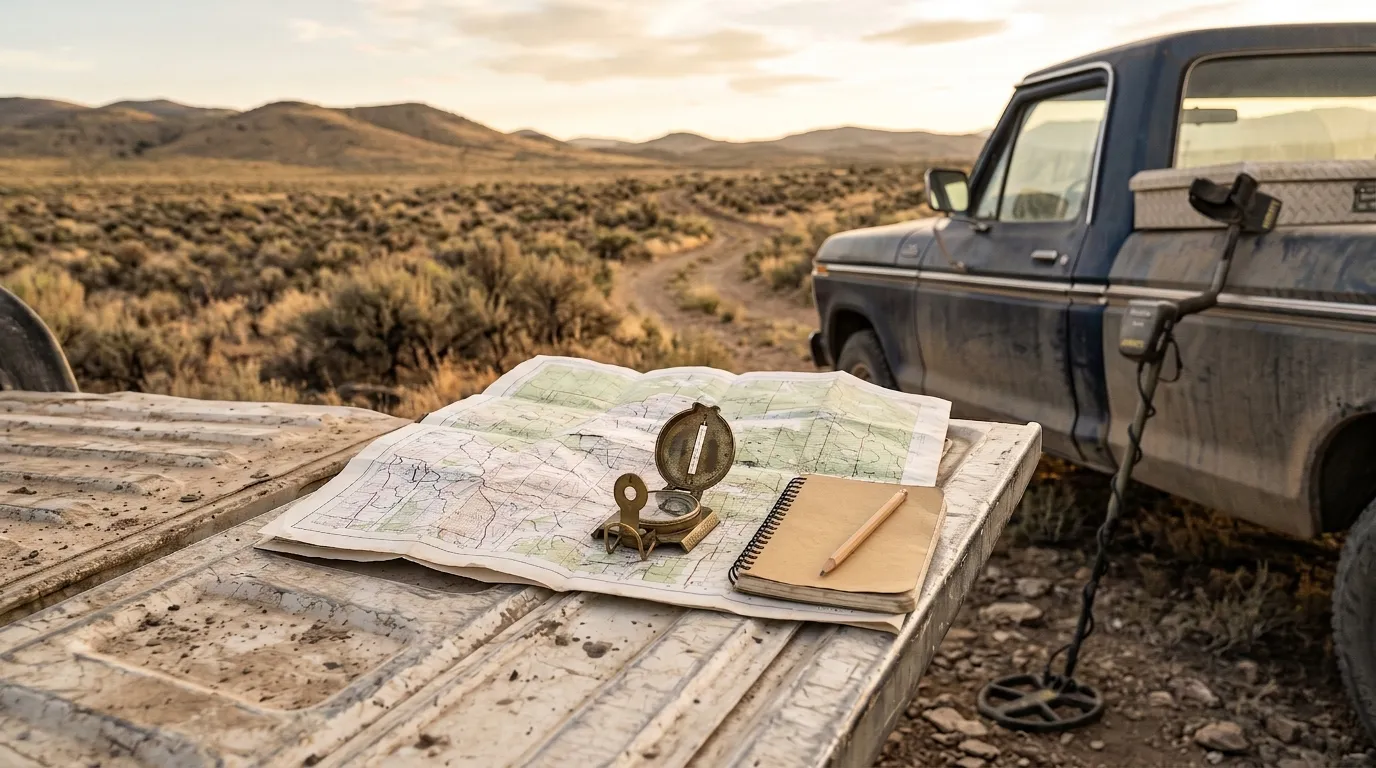
Alaska is the most open state in the country for recreational gold seekers. Much of its state land allows panning and light prospecting without a permit, there are designated public mining areas, and even state parks allow recreational metal detecting. Historic and archaeological items, though, belong to the state and carry serious penalties.
This page summarizes the official rules as of the date above. It is not legal advice; rules change, so check with the land manager before you go. For the federal background, see is metal detecting legal?.
Quick answer
| Where | Metal detecting or panning |
|---|---|
| State parks | Detecting allowed; no removal; panning only where a park rule allows |
| General state land | Panning and light prospecting without a permit |
| Petersville, Caribou Creek, Hatcher Pass | Designated recreational mining areas |
| Nome | Surf zone below mean high tide only; uplands private |
| BLM land (e.g., Dalton Highway) | Casual use, including metal detectors |
| Chugach National Forest | Panning, sluicing and small dredges in listed streams |
| National parks | No detectors; hand surface collection of rocks allowed |
| Native corporation land | Private; owner’s permission needed |
Alaska state parks
Alaska State Parks says recreational metal detecting is allowed, and no special use permit is needed for ordinary detecting that follows park regulations, closures and posted rules. You may not use detecting to disturb, damage or remove rocks, minerals, plants or other protected resources, or take fossils and historical artifacts. If you find something that may be historically significant, leave it in place and report it.
Gold panning in state parks is allowed only where a park-specific rule permits it, for example:
- Chugach State Park: gold pan and shovel only, no motorized equipment or chemicals, anadromous fish streams open only May 16 to July 14, no claims, and no digging above the ordinary high water line.
- Denali State Park: gold pan, shovel or both; anadromous streams May 16 to July 14.
- Kenai Peninsula state parks: similar limits, and no shovels within parts of the Kenai National Wildlife Refuge.
- Independence Mine State Historical Park: gold pan and shovel only.
General state land
Alaska’s regulations list uses allowed on general state land without any permit, including:
- recreational gold panning;
- prospecting with light portable equipment such as a pick, shovel, pan, earth auger or backpack drill; and
- suction dredging with a nozzle of six inches or less and an engine of 18 horsepower or less.
DNR notes this does not apply to state parks or land managed by other agencies, dredging in fish-bearing streams needs prior authorization from ADF&G Habitat, and it does not let you work someone else’s mining claim. The rules don’t mention metal detecting specifically.
Designated recreational mining areas
- Petersville Recreational Mining Area: set aside by statute for public recreational mining and closed to new claims. Panning and light equipment need no permit, and suction dredging is allowed May 15 to July 15. There are no facilities.
- Caribou Creek Recreational Mining Area (around mile 104 of the Glenn Highway): gold pans and hand shovels year-round, and from May 15 to July 15, metal detectors and small sluice boxes are allowed. No mining claims.
- Hatcher Pass Public Use Area (north of Palmer): recreational panning with hand tools anywhere except on active mining claims.
Nome
At Nome, state land begins at mean high tide, and the average tide is about one foot, so to be on state land you are effectively in the water. The uplands are privately owned, including land owned by the Bering Straits Native Corporation and Nome Gold Alaska Corporation, and mining or camping above the beach is trespass without permission.
- Hand gear such as gold pans, rocker boxes, sluices and high bankers may be used in the surf below mean high tide without a permit.
- Suction dredging is allowed only in the West Beach and East Beach public recreational mining areas, with permits, size limits and no winter dredging.
Archaeology law
Under the Alaska Historic Preservation Act, the state holds title to all historic, prehistoric and archeological resources on state land, including tidelands and submerged land. No one may excavate, remove or damage them without a permit, and illegally taken items can be seized wherever found. Protected resources include artifacts, graves, structures and fossils.
Violations are class A misdemeanors, with up to one year in jail and a fine of up to $25,000, plus civil penalties of up to $100,000 per violation.
Federal land
- BLM: federal rules count metal detectors, hand panning and non-motorized sluicing as casual use. Along the Dalton Highway, BLM says you may use a pick, shovel, rocker box, sluice box or metal detector in listed areas, with no motorized equipment, and you need a claimant’s permission to pan on a claim.
- Chugach National Forest: recreational gold panning includes hand tools, panning, sluicing and suction dredges with an intake of 4 inches or less, in listed streams. Bertha Creek, Sixmile Creek, Resurrection Creek and Crescent Creek are withdrawn from mineral entry and have no claims. Archaeological and historic objects may not be dug up.
- National parks: possessing or using metal detectors is prohibited. Alaska park units allow surface collection of rocks and minerals by hand, including gold pans, for personal use, but not silver, platinum, gemstones or fossils, and not with shovels, sluices or dredges. Klondike Gold Rush and Sitka are excluded from that allowance.
- Native corporation land is private; you need the owner’s permission to pan or mine.
Before you go
- Check land status and mining claims before you pan.
- In state parks, detect without digging up resources, and pan only where allowed.
- At Nome, stay in the surf.
- Leave artifacts and historic items in place.
New to detecting? Start with metal detecting for beginners, and see our best metal detector for gold.
Get new guides by email
One short email a week with new detecting, rockhounding and tumbling guides. You also get our printable rock tumbling grit schedule.
No spam. Unsubscribe anytime. Privacy
Frequently asked questions
Can you metal detect in Alaska state parks?
Yes. Alaska State Parks says recreational metal detecting is allowed without a special use permit, as long as it follows park rules and closures and does not disturb, damage or remove rocks, minerals, plants or other protected resources. Historical finds must be left in place and reported.
Do I need a permit to pan for gold in Alaska?
Not on most general state land. DNR lists recreational gold panning and prospecting with light hand equipment among uses allowed without a permit, but not in state parks unless a park rule allows it, and not on someone else's mining claim. Dredging in fish-bearing streams needs ADF&G approval.
Can I pan for gold on the beach at Nome?
Only in the surf, below mean high tide, which is where state land begins. The uplands at Nome are private, so mining or camping above the beach is trespass without the owner's permission. Hand gear in the surf zone needs no permit; any dredge needs permits in the two public mining areas.
Can I use a metal detector in Alaska national parks?
No. National park rules ban possessing or using metal detectors. Alaska's park units do allow surface collection of rocks and minerals by hand, including gold pans, for personal use, except silver, platinum, gemstones and fossils, and with no shovels or sluices.
Sources
- Alaska State Parks: FAQ
- Alaska Administrative Code 11 AAC 12 and 11 AAC 20 (state parks)
- Alaska Statutes AS 41.35 (Historic Preservation Act)
- Alaska DNR: Generally allowed uses on state land (fact sheet)
- Alaska DNR: Nome recreational mining stipulations (PDF)
- Alaska DNR: Nome offshore suction dredging fact sheet (PDF)
- Alaska DNR: Petersville Recreational Mining Area fact sheet (PDF)
- Alaska DNR: Caribou Creek Recreational Mining Area fact sheet (PDF)
- Alaska DNR: Hatcher Pass Public Use Area fact sheet (PDF)
- BLM: Dalton Highway gold panning (PDF)
- USFS and BLM: Kenai Peninsula gold panning booklet (PDF)
- NPS: Gold panning in Alaska
- 36 CFR 13.35 (Alaska national parks: collecting), via eCFR