 Coil
Best Pinpointer for Metal Detecting: 6 Picks Compared
Researched guide: written from manufacturer documentation and the sources listed at the end, not from hands-on testing of every product. Facts last checked November 26, 2026. Some links are affiliate links; see the disclosure.
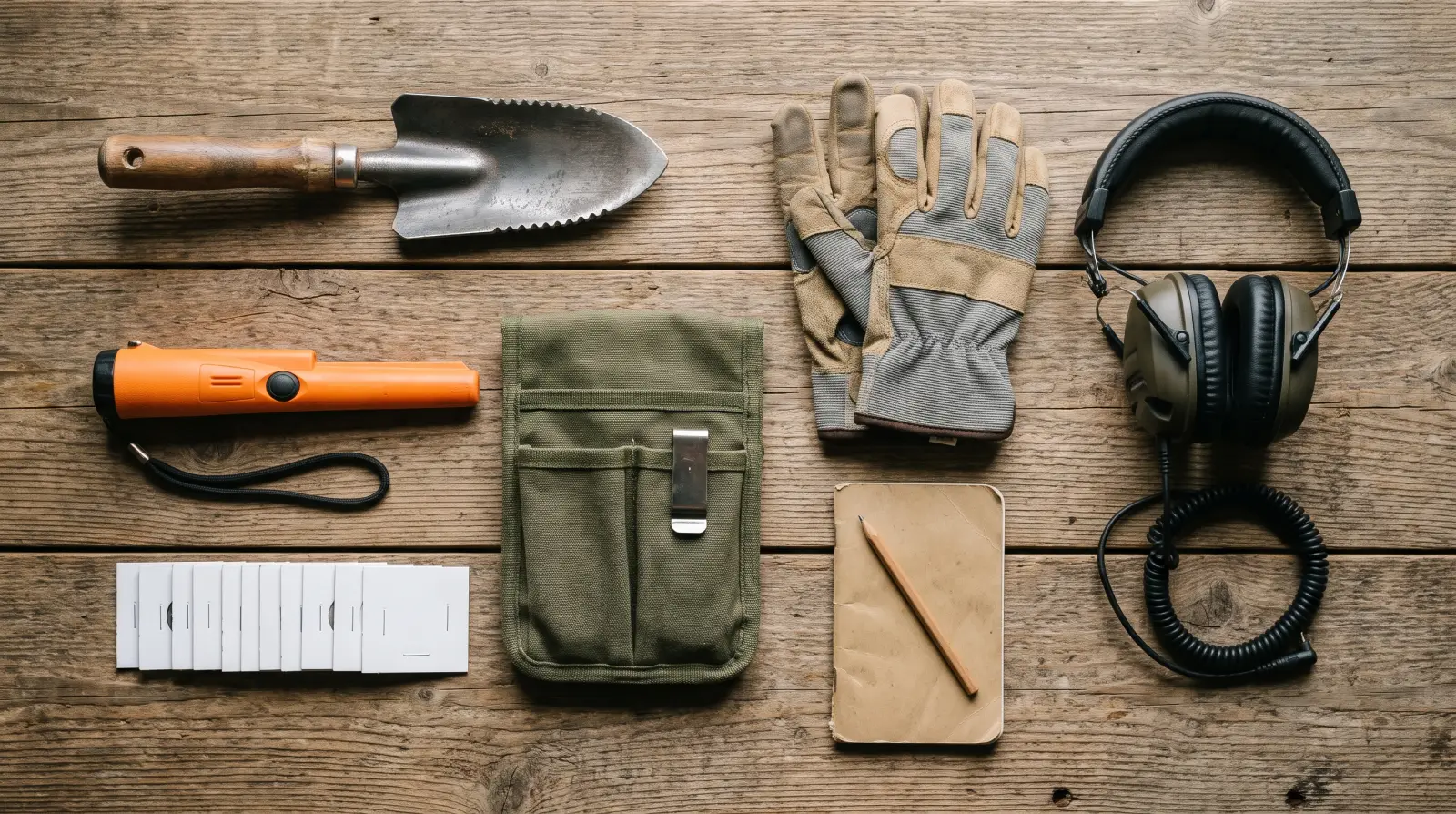
A pinpointer is a small handheld probe that finds a target once you’ve dug the hole. Instead of raking through a pile of dirt, you sweep the probe over the plug and the hole walls and it buzzes or beeps when it’s close. It’s the accessory that saves the most time and keeps holes small.
The six pinpointers below come from Garrett, Minelab and Nokta, three established detector makers. Specs come from each manufacturer’s own product pages and manuals.
Quick comparison
| Pinpointer | Waterproof | Power | Sensitivity | Iron ID | Wireless |
|---|---|---|---|---|---|
| Garrett Pro-Pointer AT | 20 ft (6 m) | 9V, up to 30 h alkaline | 3 levels | No | No |
| Garrett Pro-Pointer AT Z-Lynk | 20 ft (6 m) | 9V | 3 levels | No | Garrett Z-Lynk |
| Minelab PRO-FIND 40 | 10 ft (3 m) | 9V, up to 20 h | 5 levels | Dual tones | No |
| Minelab PRO-FIND 35 | 10 ft (3 m) | 9V, up to 20 h | 5 levels | Dual tones | No |
| Nokta AccuPOINT | 10 ft (3 m) | Rechargeable, about 25 h | 9 levels | 2-tone and iron-off | Bluetooth headphones |
| Garrett Pro-Pointer II | Weatherproof only | 9V, up to 30 h alkaline | Fixed | No | No |
What to look for
- Waterproofing. If you ever hunt the beach or rivers, choose a submersible pinpointer. Pinpointers get dropped in wet holes too.
- Adjustable sensitivity and retune. Wet sand and mineralized soil can make a pinpointer chatter. A quick retune or lower sensitivity fixes that.
- Iron identification. Separate tones for iron save digging nails out of the hole wall.
- Lost alarm. Pinpointers are easy to leave in the grass. All the models here warn you after a few idle minutes.
- Battery. 9V models are easy to feed anywhere; rechargeable models save money and charge over USB.
1. Garrett Pro-Pointer AT: best all-round pinpointer
Check the Pro-Pointer AT on Amazon
Garrett rates it IP68 and waterproof to 20 feet (6 m), the deepest rating here. It runs at 11.5 kHz on a single 9V battery, which Garrett says lasts about 30 hours with alkaline cells. It has three sensitivity settings, an audio-plus-vibrate or silent vibrate-only mode, an LED light, a scraping blade on the tip and a ruler molded into the body.
If you leave it on without pressing the button for 5 minutes, it starts chirping, and after an hour of chirps it switches itself off.
Good for: almost everyone, on land and in the water.
Keep in mind: it detects all metals with the same response, so it can’t tell you a nail from a coin.
2. Minelab PRO-FIND 40: best for telling iron from good targets
Check the PRO-FIND 40 on Amazon
Minelab calls the PRO-FIND 40 its deepest and most accurate pinpointer. Its main advantage is dual audio tones that separate ferrous junk from non-ferrous targets, which is useful in trashy parks and relic sites. It has five sensitivity levels, one-button retune, vibration that intensifies as you close in, an LED flashlight and a lost alarm. It is submersible to 3 m (10 ft) and runs up to 20 hours on a 9V battery.
Good for: detectorists who dig a lot of iron and want to skip it.
Keep in mind: 3 m is plenty for wading but less than Garrett’s 6 m.
3. Minelab PRO-FIND 35: ferrous tones for less
Check the PRO-FIND 35 on Amazon
The PRO-FIND 35 shares the 40’s dual ferrous tones, five sensitivity levels, LED and 3 m waterproofing. Minelab’s guide says the ferrous tone works when the probe is within about half an inch of an iron object. It also has a built-in lost alarm: after about 3 minutes idle it beeps every 10 seconds, and after another 5 minutes it switches off.
Good for: most of the 40’s usefulness, without the one-button retune.
Keep in mind: Minelab doesn’t document a one-button retune for the 35; it calibrates when you switch it on.
4. Nokta AccuPOINT: rechargeable, with a screen and Bluetooth
Nokta’s AccuPOINT packs the most features. It runs at 20 kHz, has nine sensitivity levels, a color LCD, audio, vibration or both, and three tone modes: 1-tone, 2-tone (iron gives an interrupted alert) and iron-off. It uses a built-in rechargeable battery rated at about 25 hours and charges over USB-C. It is waterproof to 3 m (10 ft).
It can pair with Nokta BT headphones or any low-latency Bluetooth headphones, so you hear it in the same headphones as your detector. A lost alarm starts after 5 minutes idle and keeps flashing and sounding until you press the button.
Good for: tech-minded hunters, especially those already using Nokta detectors or Bluetooth headphones.
Keep in mind: Nokta also sells an AccuPOINT LITE with the same core specs but no Bluetooth.
5. Garrett Pro-Pointer AT Z-Lynk: wireless for Garrett users
Check the Pro-Pointer AT Z-Lynk on Amazon
This is the Pro-Pointer AT with a wireless radio inside. It has the same 20-foot waterproof rating, 11.5 kHz frequency, three sensitivity levels and lost alarm, and it pairs with any Garrett Z-Lynk receiver, such as Garrett’s MS-3 wireless headphones. When paired, its own speaker switches off and you hear it through your headphones. Garrett says Z-Lynk has a 17-millisecond delay.
Good for: Garrett users who already have Z-Lynk headphones.
Keep in mind: it only pairs with Garrett’s Z-Lynk system.
6. Garrett Pro-Pointer II: budget pick for dry land
Check the Pro-Pointer II on Amazon
The Pro-Pointer II keeps Garrett’s familiar shape, 9V battery life, LED light and lost alarm, but drops the extras: sensitivity is fixed, and it is only weatherproof (IP66), meaning only the tip may be submerged. It runs at 12 kHz.
Good for: park and yard hunters who never go near water.
Keep in mind: don’t drop it in a puddle; for wet ground, the AT is the safer buy.
For the absolute basics, Minelab’s PRO-FIND 15 is waterproof to 1.5 m (5 ft) with fixed sensitivity, a single tone and no flashlight.
How to use a pinpointer
These tips come from the Garrett, Minelab and Nokta manuals:
- Switch it on away from metal. Minelab says to hold the probe at least a foot from metal; Garrett warns that turning it on next to a target can cancel it out.
- Scan the plug first. Garrett’s original manual says to check the earth plug or dirt pile, then the hole, pointing the tip at the side walls.
- Use the side, not just the tip. Garrett’s manuals describe side scanning with the probe flat against the ground, and say the most sensitive spot for small targets is the side about half an inch from the tip.
- Retune for ground and big targets. In wet sand or mineralized soil, hold the tip to the ground and retune, or lower the sensitivity. For a large target, retune as you approach to narrow the detection field.
- Don’t pry with it. Garrett says not to use the Pro-Pointer as a digging or prying tool. Switch it off between uses to save battery.
Which one should you pick?
- One pinpointer for everything, including water: Garrett Pro-Pointer AT.
- Trashy sites full of iron: Minelab PRO-FIND 40 or 35.
- Rechargeable, Bluetooth, most features: Nokta AccuPOINT.
- Garrett Z-Lynk headphones already: Pro-Pointer AT Z-Lynk.
- Dry land on a budget: Garrett Pro-Pointer II.
A pinpointer pairs best with a good digger and a finds pouch; see our metal detecting supplies list, and if you’re still choosing a detector, start with the best metal detector for beginners.
Get new guides by email
One short email a week with new detecting, rockhounding and tumbling guides. You also get our printable rock tumbling grit schedule.
No spam. Unsubscribe anytime. Privacy
Frequently asked questions
Do I really need a pinpointer for metal detecting?
It isn't required, but most detectorists consider it the most useful accessory after a digging tool. A pinpointer finds the target inside the hole or plug quickly, so you dig smaller holes and lose fewer small items in the dirt.
What is the best waterproof pinpointer?
The Garrett Pro-Pointer AT is rated waterproof to 20 feet (6 m). Minelab's PRO-FIND 35 and 40 and Nokta's AccuPOINT are rated to 3 m (10 ft). The Garrett Pro-Pointer II is only weatherproof, so keep it out of the water.
Can a pinpointer tell iron from other metals?
Some can. Minelab's PRO-FIND 35 and 40 use dual tones to separate ferrous from non-ferrous targets, and Nokta's AccuPOINT has a 2-tone mode with an iron-off option. Garrett's Pro-Pointers detect all metals with the same response.
Can a pinpointer connect to my detector's headphones?
The Garrett Pro-Pointer AT Z-Lynk pairs with Garrett Z-Lynk receivers such as the MS-3 wireless headphones. Nokta's AccuPOINT pairs with Nokta BT headphones or any low-latency Bluetooth headphones.